Creating a more accessible, user-centered path to CTE programs, resources and opportunities.
Client: Idaho Division of Career Technical Education, https://cte.idaho.gov/
Services: UX Research · Information Architecture · UX/UI Design · Accessibility · WordPress Development · Content Migration & Training
The Challenge
The Idaho Division of Career Technical Education (IDCTE) serves students, families, educators, employers and partners across the state. Its existing website had grown around the agency’s organizational structure, making it difficult for visitors to know where to look for programs, funding, training and other resources.
Accessibility was the primary driver for the redesign, followed closely by improving the overall user experience.
A Research-Informed Approach
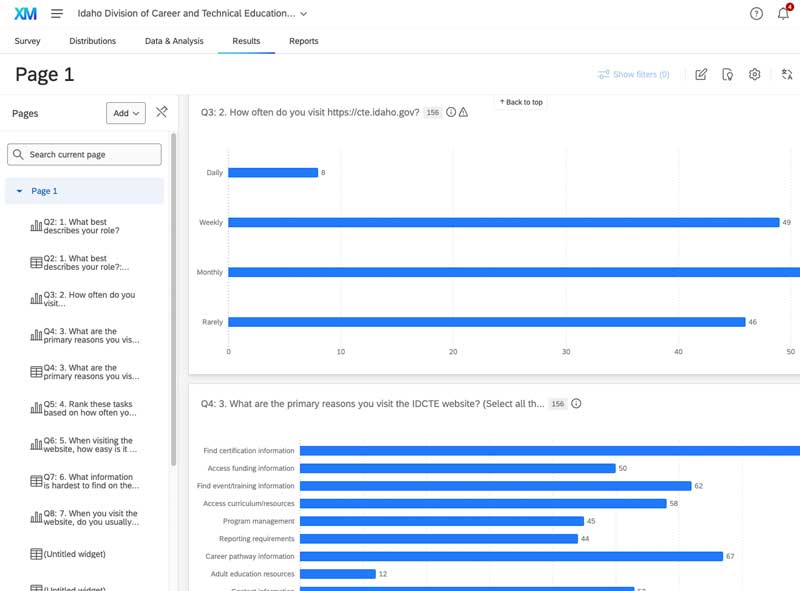
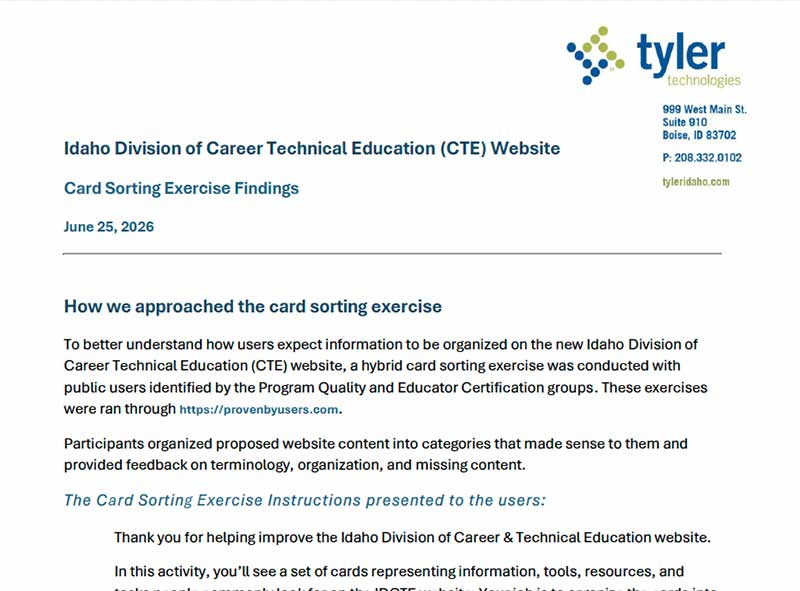
Tyler Idaho began with website analytics, stakeholder input and multiple user surveys to better understand who was using the site, what they needed and where the existing experience created challenges.
Those findings informed a new information architecture focused less on CTE’s internal organization and more on the tasks visitors come to the website to accomplish.
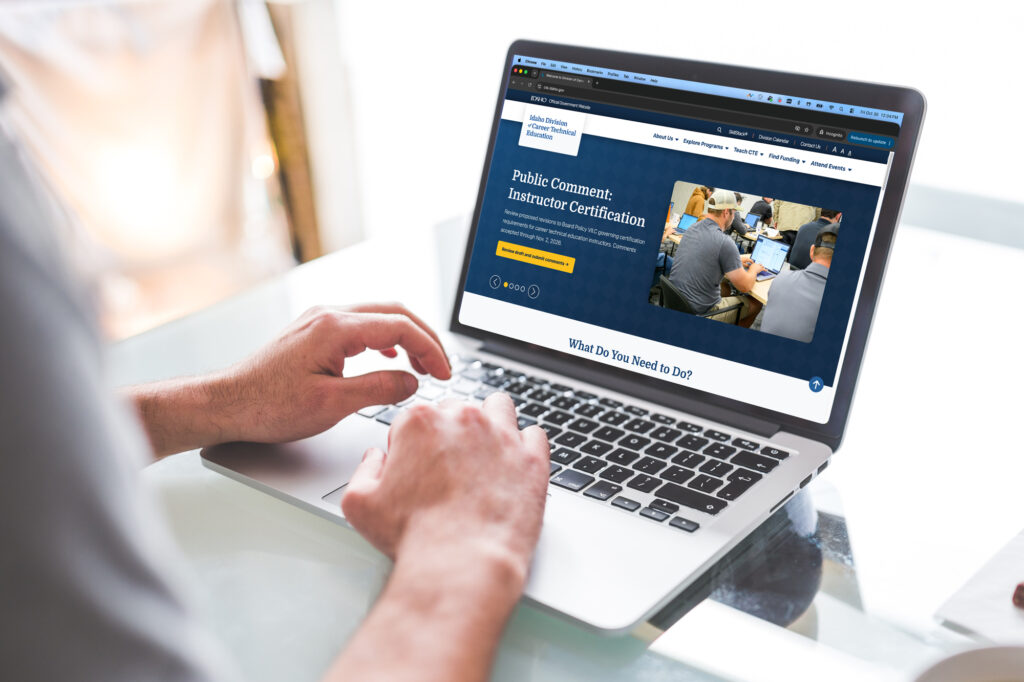
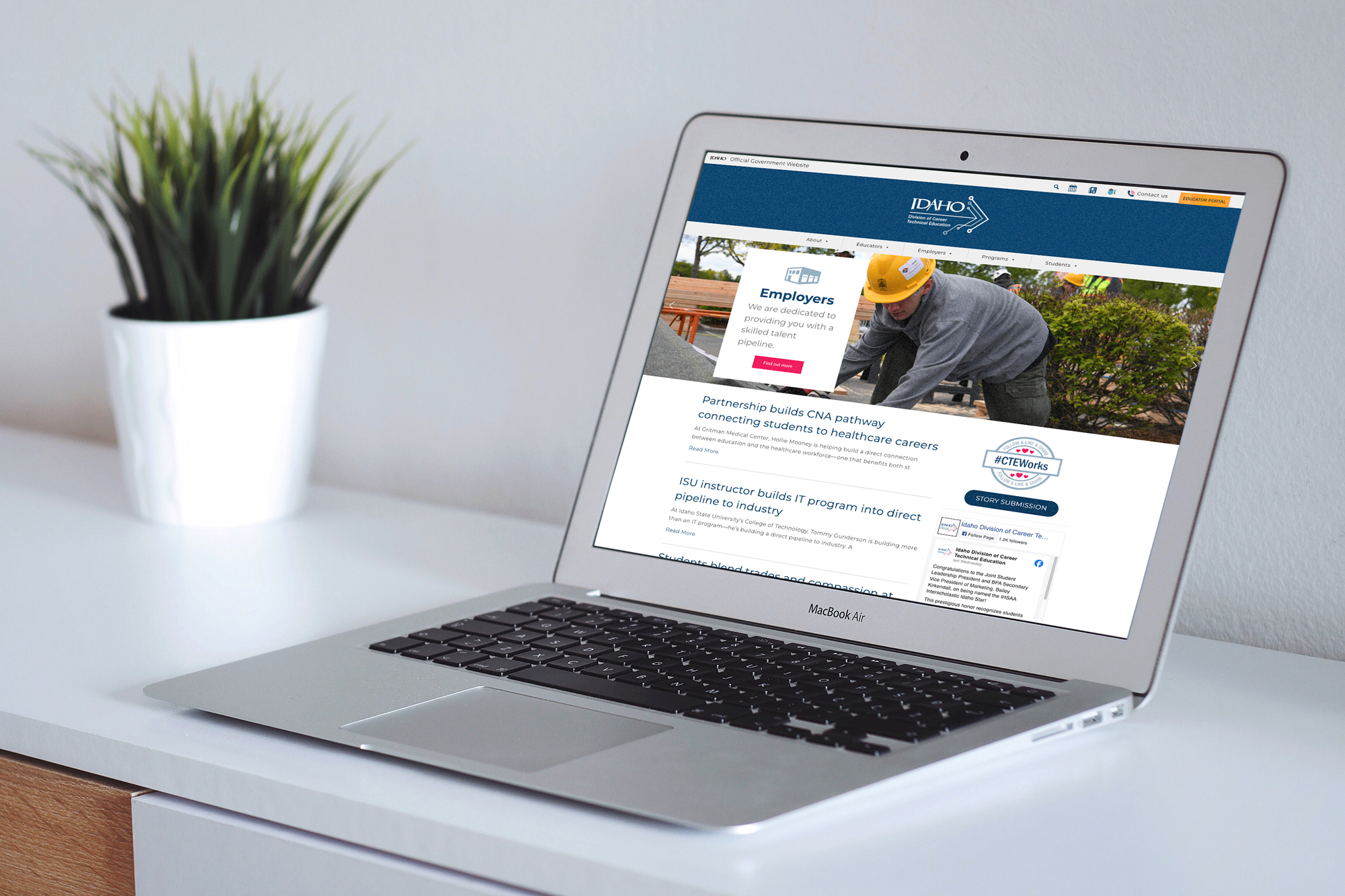
The navigation shifted from broad categories such as Educators, Employers, Programs and Students to clearer pathways including Explore Programs, Teach CTE, Find Funding and Register for an Event.


Designing Around What People Need
The same task-oriented strategy shaped the new homepage.
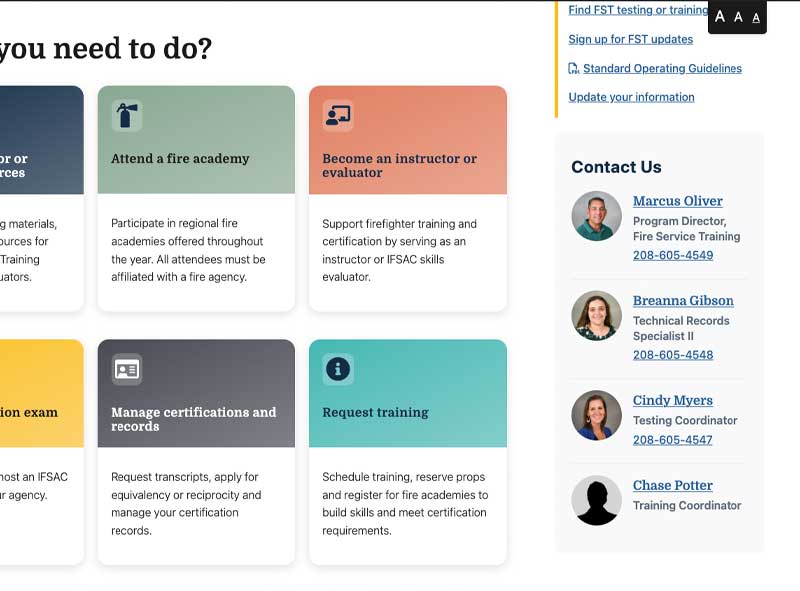
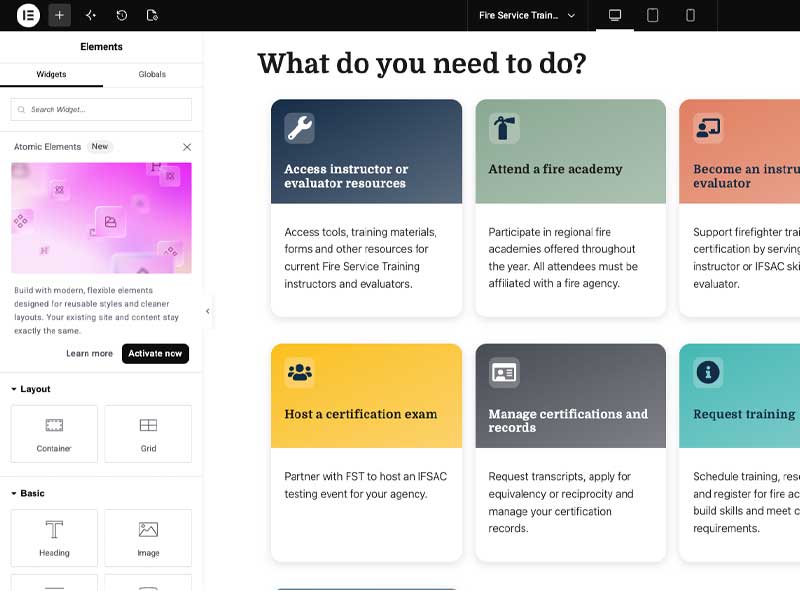
A prominent “What Do You Need to Do?” section gives visitors direct access to common needs such as becoming a CTE educator, exploring programs, requesting a GED transcript, accessing Fire Services training and finding funding.
The redesigned homepage also gives greater visibility to CTE’s programs, statewide impact, success stories, news and upcoming opportunities.
Accessibility from the Start
Accessibility was incorporated throughout the project rather than treated as a final checklist.
Tyler Idaho worked to remediate identified accessibility issues and develop the redesigned site toward WCAG 2.1 AA standards, with attention to semantic structure, color contrast, alternative text, meaningful links, keyboard accessibility and accessible documents.
The project also included an in-person two-hour WCAG 2.1 AA document accessibility training, document-remediation guidance, templates and a 63-page website documentation guide to help CTE staff create and maintain accessible content after launch.
Built to Evolve for CTE’s Team
Reusable components and structured content were created for programs, contacts, events, success stories and other frequently updated information, making the site easier for CTE staff to maintain while preserving a consistent user experience.
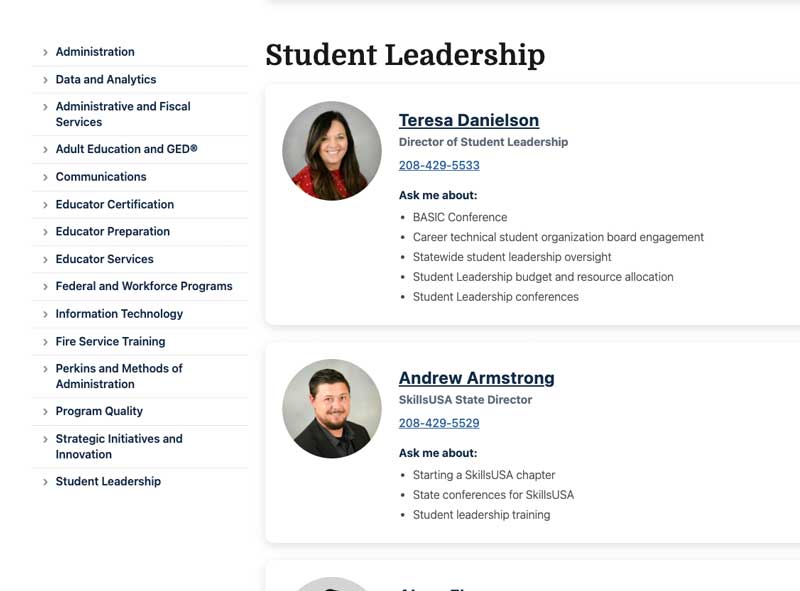
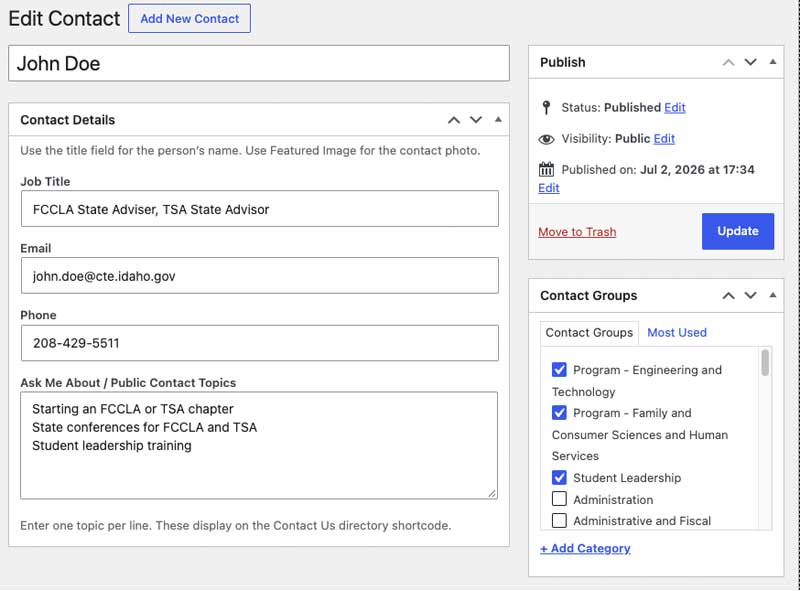
A custom Contacts content type and contact groups allow staff to update a person’s details once and display the right contacts wherever they are needed, from the main Contact Us directory to a related page sidebar, using purpose-built shortcodes. Dedicated success-story and event-management areas provide similarly structured ways to publish recurring content.
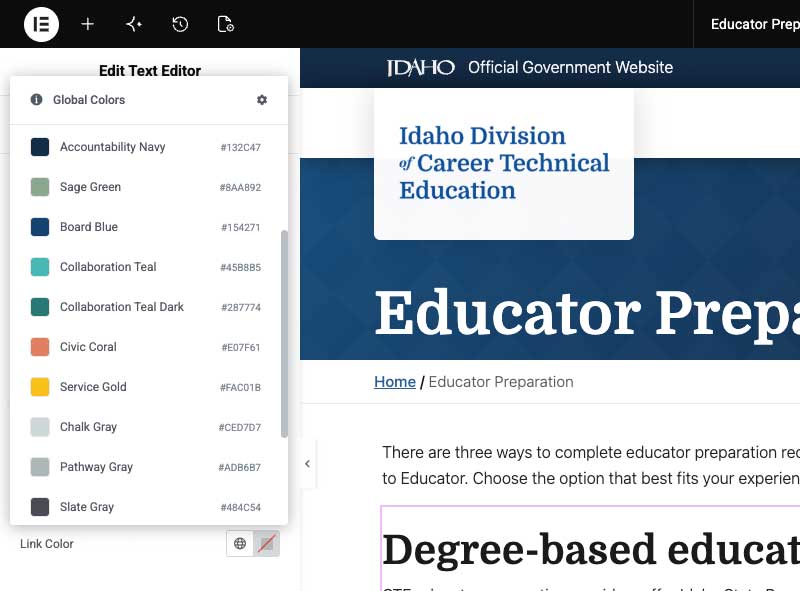
Reusable Elementor templates, preconfigured CTE brand colors and editable card patterns give staff a dependable starting point for new pages. This helps the team publish content faster without having to recreate layout, styling or accessibility decisions each time.

The Outcome
The redesigned website replaces an organization-centered experience with clearer, task-focused pathways built around the people CTE serves.
It also gives CTE a stronger foundation for the future: a modern, accessible website, reusable content-management tools, continued analytics measurement and staff equipped to maintain accessible digital content.
Measured Results After Launch
Accessibility improvements validated after launch
via Siteimprove scores
+88%
more page views
+20%
more resource downloads